
There is a common misconception that corned beef must always be soft, gray, and boiled until it loses its soul. While traditional “New England Boiled Dinners” have their place, there is a whole world of texture and flavor waiting for those who dare to crisp their brisket. Imagine a piece of beef so tender it practically melts when it hits your tongue, but with a crust that crackles with the sweetness of brown sugar, the tang of Dijon, and the aromatic punch of toasted fennel and garlic. This Crispy Corned Beef recipe is designed to bridge the gap between traditional comfort food and modern culinary technique. Whether you are celebrating St. Patrick’s Day or simply looking for a foolproof Sunday roast, this dual-method guide ensures a centerpiece that looks as stunning as it tastes.
Why You’ll Love This Recipe
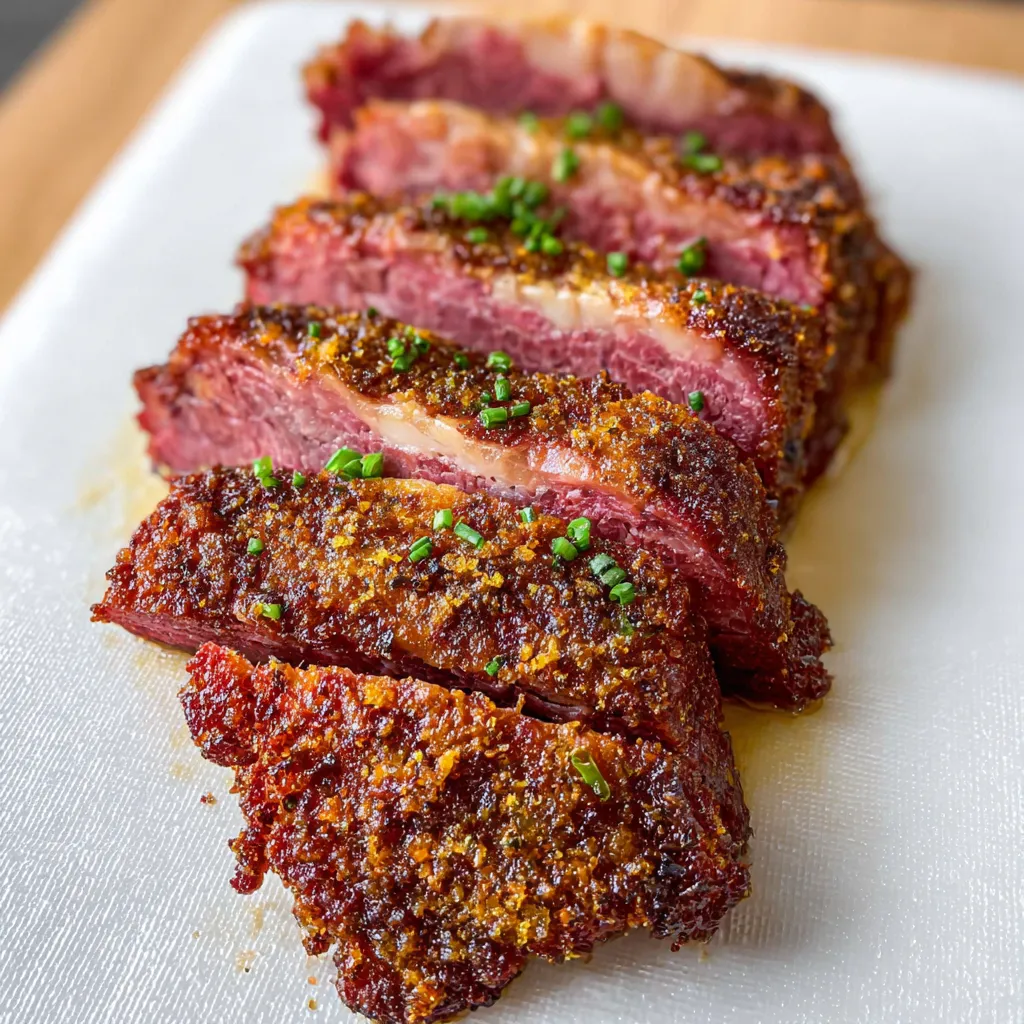
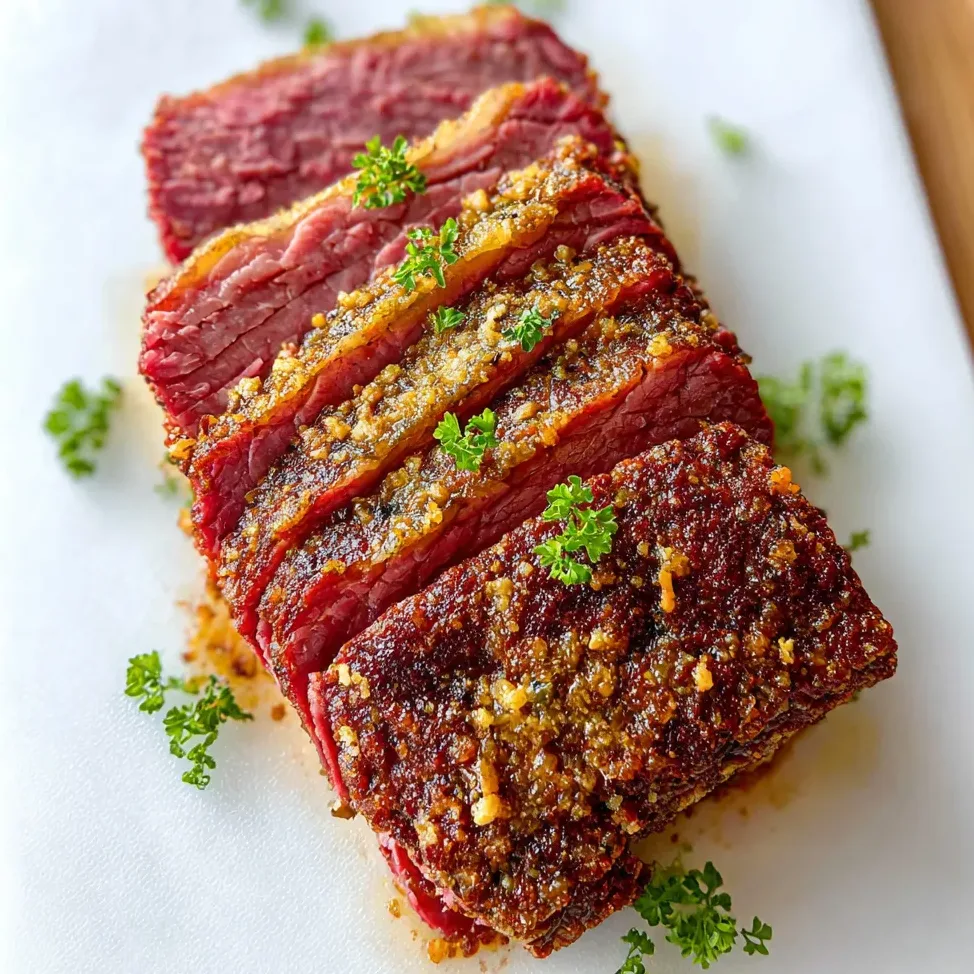
You’re going to love this recipe because it solves the “salt problem” and the “texture problem” simultaneously. By rinsing the meat and using an apple juice braise, we balance the intense salinity of the brine. The real magic, however, happens in the final ten minutes. Most recipes stop once the meat is tender, but we take it a step further by applying a mustard-sugar rub and finishing it under the broiler. This creates a “bark” similar to high-end BBQ, providing a satisfying crunch that contrasts beautifully with the succulent interior. Plus, the flexibility of choosing between an oven-roasting method or a set-it-and-forget-it slow cooker approach makes it perfect for any schedule.
What Is Crispy Corned Beef?
Corned beef itself is a beef brisket that has been salt-cured in a brine—the “corns” in the name refer to the large grains of salt historically used to preserve the meat. “Crispy” corned beef takes this classic cut and subjects it to a high-heat finish. Unlike traditional boiling, which keeps the exterior moist but soft, our method involves a dry-heat caramelization step. By layering Dijon mustard and a custom spice blend onto the fat cap and then broiling it, we transform the outer layer into a savory, sweet, and crispy topping. It turns a standard holiday staple into a sophisticated dish that mimics the depth of a slow-roasted prime rib or smoked brisket.
Ingredients Overview
To achieve the perfect balance of flavors, every ingredient in this list serves a specific purpose.
- Corned Beef Brisket (3-4 lbs): Look for a “point cut” for more fat and flavor, or a “flat cut” for more uniform slices. Both work beautifully with this method.
- Dijon Mustard: This acts as the “glue” for our crust while providing a sharp, vinegary acidity that cuts through the richness of the beef fat.
- The Rub (Brown Sugar, Garlic, Pepper, Fennel): The brown sugar provides the caramelization, while the garlic and black pepper offer a savory baseline. Fennel seeds are the “secret ingredient” here, offering a subtle anise note that complements the brine’s pickling spices.
- Apple Juice or Cider: Instead of plain water, we use apple juice as the braising liquid. The natural sugars and malic acid in the juice help tenderize the meat and add a hidden layer of fruitiness that pairs perfectly with the salt.
- Apple Cider Vinegar: This provides the necessary brightness to balance the heavy fats and salts inherent in the brisket.
- Spice Packet: Never throw this away! We crush these whole spices to release their oils, intensifying the traditional flavor profile of the meat.
Ingredient Substitutions & Tips
If you find yourself missing an ingredient, don’t worry. This recipe is quite forgiving. Instead of apple juice, you can use a dry hard cider or even a stout beer (like Guinness) for a deeper, more bitter-sweet Irish flair. If you don’t have Dijon mustard, a spicy brown mustard or even whole-grain mustard works well. For those avoiding refined sugar, honey or maple syrup can be substituted for brown sugar in the rub, though they may caramelize faster, so watch the broiler closely. Lastly, if you don’t have fennel seeds, you can substitute with a pinch of ground cloves or star anise for a similar aromatic complexity.
Step-by-Step Instructions
Prep the Meat
Start by removing the corned beef from its packaging. You will notice a thick, cloudy brine; rinse this off completely under cold running water. This is a crucial step to ensure the meat isn’t inedibly salty. Pat it very dry with paper towels. Next, take the spice packet provided with the meat. Use a mortar and pestle or the bottom of a heavy skillet to gently crush the seeds. Mix these with your minced garlic, brown sugar, fennel, and black pepper.
Apply the Crust
Spread the 2 tablespoons of Dijon mustard over the fatty side of the brisket. Be generous—it shouldn’t be see-through. Take your spice and sugar mixture and press it firmly into the mustard. This creates a thick paste that will eventually become your crispy crust.
Method 1: The Oven (Braising)
Preheat your oven to 325°F. In a heavy roasting pan or Dutch oven, pour in your apple juice and apple cider vinegar. Place the seasoned beef inside, seasoned side up. Cover the pan tightly with aluminum foil or a heavy lid. Bake for approximately 50 minutes per pound. For a 3-4 pound brisket, this usually takes about 3 hours. The meat is ready when a knife slides in and out with almost no resistance.
Method 2: The Slow Cooker
Pour the apple juice and vinegar into the bottom of your slow cooker. Place the prepared beef inside (seasoned side up). Set the cooker to LOW and let it glide for 6 to 8 hours. Avoid using the “High” setting if possible, as the high heat can cause the muscle fibers to toughen before the connective tissue has a chance to melt.
The Crispy Finish
This is the most important part. Once the meat is tender, carefully transfer it to a foil-lined baking sheet. Turn your oven to “Broil.” Place the beef on the middle rack (about 6 inches from the heat). Broil for 5-6 minutes. Watch it like a hawk! The sugar will go from bubbling to burnt in seconds. You want a dark, mahogany crust with a few charred edges.
Expert Baking/Cooking Tips
For the absolute best results, always slice your corned beef against the grain. If you look closely at the meat, you will see the long muscle fibers running in one direction; your knife should cut perpendicular to those lines. This breaks up the fibers and ensures every bite is tender. Additionally, let the meat rest! Give the brisket at least 15 minutes on the cutting board before you touch it with a knife. This allows the juices to redistribute, so they don’t all run out on the board, leaving you with dry meat. Finally, if you have time, braise the meat a day early, let it chill, and then do the broiler step right before serving.
The Importance of the Broiler Step
Why bother with the broiler? Traditional corned beef is often criticized for its texture—specifically the fat cap, which can feel “rubbery” or “greasy” when only boiled. By introducing the high-intensity heat of the broiler, you are essentially performing a rapid-fire Maillard reaction. This renders the remaining fat, turning it from a rubbery layer into a crisp, flavorful topping that tastes more like premium bacon than boiled beef. This step also “sets” the spices and sugar, creating a crust that stays attached to the meat when sliced, providing a burst of concentrated flavor in every forkful.
Serving Suggestions
Classic accompaniments are classic for a reason. Serve your crispy corned beef alongside buttery colcannon (mashed potatoes with kale or cabbage) or honey-glazed roasted carrots. If you prefer the traditional route, add wedges of green cabbage to the roasting pan during the last 45 minutes of cooking. For a modern twist, serve the sliced beef on sliders with a dollop of horseradish cream and a side of crispy smashed potatoes.
Storage & Make-Ahead Tips
Leftover crispy corned beef is a gift. It can be stored in an airtight container in the refrigerator for up to 4 days. To reheat, avoid the microwave as it can make the meat rubbery. Instead, wrap slices in foil and heat in a 350°F oven until warmed through. This meat also freezes beautifully for up to 3 months—just ensure it is tightly wrapped to prevent freezer burn.
FAQs
Q: Do I really have to rinse the corned beef?
A: Yes! The brine it sits in is extremely high in sodium. Rinsing removes the surface salt, allowing the flavors of the mustard and brown sugar to shine without being overwhelmed by saltiness.
Q: Can I use this recipe for a different cut of beef?
A: This specific spice blend and cooking method are designed for the salt-cured nature of corned beef. However, you could use a fresh brisket, though you would need to add significantly more salt to the rub.
Q: What if I don’t have a broiler?
A: You can achieve a similar effect by turning your oven up to 450°F for the final 10-15 minutes of cooking, though the crust won’t be quite as localized on the top.
Q: Is it supposed to be pink inside?
A: Yes. Because corned beef is cured with sodium nitrite, it will retain a bright pink or reddish color even when fully cooked to a safe temperature.
Q: Can I add potatoes to the slow cooker?
A: Absolutely. Add halved baby potatoes and carrots around the base of the beef at the start of the cooking process. They will soak up the apple juice and beef drippings!
Final Thoughts
Making a restaurant-quality corned beef doesn’t require a culinary degree—just a little patience and a hot broiler. By combining the low-and-slow braising technique with a sweet and savory crust, you elevate a humble cut of meat into something truly spectacular. Whether you choose the oven or the slow cooker, the result is a tender, flavor-packed meal that will have everyone asking for seconds. Don’t forget to save the leftovers for the best Reuben sandwich of your life!