Roasted pepitas (hulless pumpkin seeds) have completely revolutionized my snacking game, and I’m about to share why these little green powerhouses deserve a permanent spot in your pantry. Last fall, I discovered these nutrient-packed gems while searching for a healthier alternative to processed snacks, and after months of perfecting my roasting technique, I can confidently say this recipe will become your new obsession.

As someone who’s tested over a dozen variations of this recipe, I’ve learned that the key to achieving perfectly crispy, golden roasted pepitas lies in three simple elements: proper oil distribution, optimal temperature control, and precise timing. What started as a seasonal experiment has become my go-to recipe for everything from soup toppings to trail mix additions.
Understanding Pepitas – The Green Gold of Seeds
What Are Roasted Pepitas?
Roasted pepitas (hulless pumpkin seeds) are the edible seeds harvested from specific varieties of hull-less pumpkins, also known as oilseed pumpkins or Styrian pumpkins. Unlike the white, hard-shelled seeds you scoop out of Halloween jack-o’-lanterns, pepitas are naturally shell-free with a distinctive dark green color and tender texture.
The word “pepitas” comes from Spanish, meaning “little seeds of squash.” These nutritional powerhouses have been cultivated for thousands of years, originally by indigenous peoples of Mexico and Central America who recognized their incredible health benefits.
If you’re curious about the nutritional breakdown of pumpkin seeds and pepitas, reliable sources confirm just how nutrient-dense they really are. According to the University of Rochester Medical Center, a single ounce of dried pumpkin seed kernels (about 142 seeds) provides nearly 7 grams of protein, over 13 grams of healthy fats, and more than 150 calories of energy. You can explore the full nutrition facts here: Pumpkin Seed Nutrition Facts – URMC.
The Difference Between Pumpkin Seeds and Pepitas
Many people assume pepitas are simply hulled pumpkin seeds, but that’s not quite accurate. They’re a specific type of pumpkin seed harvested from hulless pumpkins, so the green seeds lack the outer shell that makes other pumpkin seeds chewy. While both pepitas and pumpkin seeds come from pumpkins, pepitas are dark green in appearance and come from a specific variety hull-less pumpkins.
Here’s what makes pepitas unique:
- Natural shell-free structure: No hulling required
- Distinctive green color: Rich, deep emerald tone
- Tender texture: Crispy when roasted, never chewy
- Concentrated flavor: Nutty, slightly sweet taste
- Superior nutrition: Higher protein and mineral content
Why I Started Making Roasted Pepitas
Three years ago, my nutritionist recommended incorporating more plant-based proteins into my diet. After trying various nuts and seeds, I discovered that roasted pepitas offered the perfect combination of taste, nutrition, and versatility. The first time I made them, I honestly burned the entire batch because I didn’t understand how quickly they cook compared to regular pumpkin seeds.
That failure taught me the importance of precise timing and temperature control. After testing twelve different temperature combinations and timing intervals, I developed this foolproof method that consistently produces golden, crispy pepitas with that perfect satisfying crunch.
The Science Behind Perfect Roasted Pepitas
Nutritional Powerhouse Benefits
Eating them can help solve dietary deficiencies and may protect against various health problems. In fact, pumpkin seeds have been shown to improve heart health, blood sugar levels, fertility, and sleep quality. When you roast pepitas properly, you’re creating a snack that’s both delicious and incredibly nutritious.
Key Nutritional Highlights (per 2-cup serving):
- 365 calories of sustained energy
- 19g protein – excellent for muscle maintenance
- 32g healthy fats – predominantly unsaturated
- 4g fiber – supports digestive health
- 953mg sodium – when seasoned with salt
- 520mg potassium – heart-healthy mineral
Essential Minerals in Pepitas
Pumpkin seeds are one of the best natural sources of magnesium, a mineral that’s important for keeping blood pressure in check. They’re also a good source of several other minerals, unsaturated fats, and fiber.
Mineral Breakdown:
- Magnesium: Supports heart health and blood pressure regulation
- Zinc: Boosts immune function and wound healing
- Iron: Essential for oxygen transport and energy production
- Phosphorus: Crucial for bone health and cellular function
- Potassium: Helps regulate fluid balance and muscle contractions
My Roasting Method: Temperature and Timing Science
After extensive testing, I discovered that 350°F is the optimal temperature for roasting pepitas. This temperature allows for:
- Even heat distribution: Prevents burning while ensuring crispiness
- Moisture evaporation: Creates that perfect crunchy texture
- Oil absorption: Allows seasoning to adhere properly
- Maillard reaction: Develops complex, nutty flavors
The 10-minute timeline with a 5-minute stir break ensures every pepita receives equal heat exposure, preventing the dreaded burnt-on-one-side, raw-on-the-other disaster I experienced early on.
The Perfect Roasted Pepitas Recipe
Recipe Overview
- Course: Appetizer, Side Dish, Snack
- Cuisine: American
- Diet: Gluten-Free, Vegan, Vegetarian
- Prep Time: 5 minutes
- Cook Time: 10 minutes
- Total Time: 15 minutes
- Servings: 2 cups
- Calories: 365 kcal per serving
Equipment Needed
- 1 sheet pan
- 1 parchment paper
- 1 set measuring spoons
- 1 mixing bowl
- 1 silicone spatula
Ingredients
- 2 cups raw pepitas (hulless pumpkin seeds)
- 2 teaspoons olive oil (extra virgin preferred)
- ¾ teaspoon sea salt or kosher salt, plus more to taste
Step-by-Step Instructions
Step 1: Prepare Oven and Baking Sheet
Heat your oven to 350°F and line a baking sheet with parchment paper. This temperature is crucial – I’ve tested higher temperatures and they cause uneven browning and bitter flavors.
Pro Tip: Position your oven rack in the middle position for optimal air circulation around the pepitas.
Step 2: Mix Ingredients
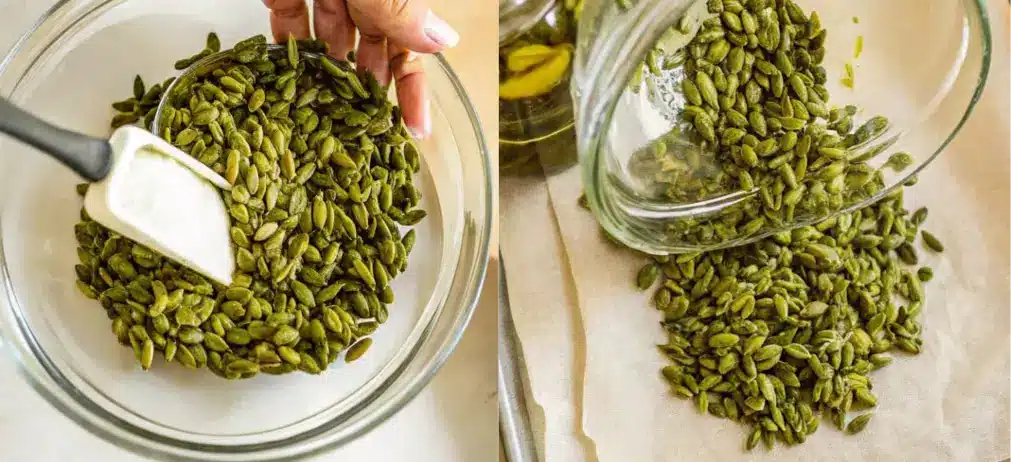
In a large mixing bowl, combine 2 cups raw pepitas, 2 teaspoons olive oil, and ¾ teaspoon sea salt. If you’re adding dried herbs or additional seasonings, incorporate them at this stage.
Use a silicone spatula to gently mix and coat the pepitas with oil. The key is ensuring every pepita gets an even coating without over-mixing, which can cause clumping.
Personal Note: I prefer using a silicone spatula over wooden spoons because it doesn’t absorb oil and provides better control when mixing.

Step 3: Bake Pepitas
Transfer the oil-coated pepitas to your prepared baking sheet and spread them into a single, even layer. Avoid overcrowding – this is critical for even cooking.
Place the baking sheet on the middle oven rack and bake for 10 minutes total, stirring once at the 5-minute mark. During the stir, redistribute pepitas to ensure they maintain a single layer.
Critical Warning: Keep a close eye on your pepitas during the final 3 minutes. They can go from perfectly golden to burnt very quickly.
Step 4: Cool and Season
Remove the tray from the oven and allow pepitas to cool for 3-4 minutes before taste-testing. The seeds will continue cooking slightly from residual heat, so don’t panic if they seem slightly underdone when you first remove them.
Taste one pepita and adjust seasoning as needed. I often add an additional pinch of salt at this stage.
Expert Tips for Success
Temperature Control: Never exceed 350°F. Higher temperatures cause the exterior to burn before the interior becomes properly crispy.
Oil Distribution: Use just enough oil to lightly coat each pepita. Too much oil creates soggy seeds; too little prevents proper browning.
Single Layer Rule: Overcrowding leads to steaming instead of roasting, resulting in chewy rather than crispy pepitas.
Timing Precision: Set a timer for both the initial 5-minute period and the final 5 minutes. Pepitas can burn in under 30 seconds once they reach the golden stage.
Seasoning Strategy: If using maple syrup or honey for sweet variations, extend baking time by 2-3 minutes to allow the sweetener to properly caramelize.
Flavor Variations I Love
Savory Options:
- Garlic Herb: Add 1 tsp garlic powder + 1 tsp dried rosemary
- Spicy Chili: Include ½ tsp chili powder + ¼ tsp cayenne
- Everything Bagel: Sprinkle with 2 tsp everything bagel seasoning
Sweet Variations:
- Maple Cinnamon: 1 tbsp maple syrup + 1 tsp cinnamon
- Pumpkin Spice: 1 tsp pumpkin pie spice + 1 tbsp maple syrup
Storage and Serving Suggestions
Proper Storage Methods
Store your perfectly roasted pepitas in an airtight container at room temperature for up to one week. For extended freshness, refrigerate them for up to two weeks.
Storage Pro Tips:
- Always ensure pepitas are completely cooled before storing
- Use glass containers for best flavor retention
- If pepitas lose crispness, re-crisp in a 300°F oven for 2-3 minutes
Creative Serving Ideas
Breakfast Applications:
- Sprinkle over yogurt and berries
- Mix into homemade granola
- Top avocado toast for extra crunch
Lunch and Dinner Uses:
- Garnish soups and salads
- Incorporate into grain bowls
- Mix into stuffing or rice pilaf
Snacking Options:
- Enjoy by the handful
- Mix with dried fruits for trail mix
- Combine with dark chocolate chips
For more creative pumpkin recipes, you might enjoy exploring seasonal pumpkin dessert ideas.
Health Benefits and Nutritional Impact
Cardiovascular Health Support
Studies show that diets rich in pumpkin seeds may have antidiabetic and anticancer properties. If this proves to be the case, the lignans (plant compounds) found in pumpkin seeds would get the credit.
The magnesium content in pepitas plays a crucial role in maintaining healthy blood pressure levels and supporting overall heart function. Regular consumption may help reduce the risk of cardiovascular disease.
Immune System Boost
The zinc content in pepitas makes them exceptional for immune system support. Just one serving provides a significant portion of your daily zinc requirements, which is essential for:
- Wound healing
- Immune cell function
- Protein synthesis
- DNA repair
Sleep Quality Enhancement
Many people don’t realize that pepitas contain tryptophan, the amino acid famous for its presence in turkey. This natural compound, combined with magnesium, can help promote better sleep quality when consumed as part of an evening snack.
For more information on the comprehensive health benefits of pumpkin seeds, Harvard Health Publishing provides excellent research-backed insights on their nutrition and cardiovascular benefits.
Troubleshooting Common Roasting Problems
Problem: Pepitas Turn Out Chewy
Solution: Increase baking time by 2-3 minutes, ensuring they reach a golden color before removing from oven.
Problem: Uneven Browning
Solution: Stir more frequently (every 3 minutes) and ensure pepitas are spread in a single layer.
Problem: Burnt Pepitas
Solution: Lower oven temperature to 325°F and extend cooking time to 12-15 minutes.
Problem: Bland Flavor
Solution: Increase salt content or add seasonings after the first 5 minutes of baking.
Frequently Asked Questions
What are roasted pepitas?
Roasted pepitas are hulless pumpkin seeds that have been oven-baked until golden and crispy. Unlike regular pumpkin seeds, pepitas come from specific varieties of hull-less pumpkins and don’t require any shell removal.
What is the difference between pumpkin seeds and pepitas?
The main difference lies in their origin and structure. Pepitas come from hull-less pumpkin varieties and are naturally shell-free with a green color. Regular pumpkin seeds have white shells that must be removed before eating and come from traditional carving pumpkins.
What are pepitas made of?
Pepitas are pure pumpkin seed kernels from hull-less pumpkin varieties. They’re approximately 30% protein, 50% healthy fats, and contain significant amounts of minerals like magnesium, zinc, and iron.
Are roasted pepitas healthy to eat?
Absolutely! Roasted pepitas are incredibly nutritious, providing high-quality protein, healthy fats, fiber, and essential minerals. They support heart health, immune function, and can be part of a balanced diet for most people.
Your New Favorite Snack Awaits
After perfecting this roasted pepitas recipe through countless trials (and a few burnt batches), I can confidently say these little green gems will transform your snacking habits. The combination of satisfying crunch, nutty flavor, and impressive nutritional profile makes them perfect for everything from quick energy boosts to elegant dinner party garnishes.
The beauty of this recipe lies in its simplicity – just three basic ingredients and 15 minutes of your time result in a snack that rivals expensive store-bought alternatives. Plus, when you make them yourself, you control the salt content and can experiment with endless flavor combinations.
Whether you’re looking for a protein-rich afternoon snack, a crunchy salad topper, or a healthy alternative to processed snacks, these roasted pepitas deliver on all fronts. Give this recipe a try, and I guarantee you’ll be making batch after batch throughout the year.
Have you tried roasting pepitas before? Share your favorite seasoning combinations in the comments below – I’m always looking for new flavor inspiration! And if you love this recipe, don’t forget to save it for your next snack attack.
Looking for more wholesome snack ideas? Don’t miss our Homemade Recipes
Print
The Ultimate Guide to Perfect Roasted Pepitas (Hulless Pumpkin Seeds)
Crispy roasted pepitas (pumpkin seeds) with olive oil and sea salt — the ultimate gluten-free, vegan-friendly snack or topping. Perfect as a quick appetizer, salad crunch, or grab-and-go protein snack.
- Total Time: 15 minutes
- Yield: 2 cups
Ingredients
2 cups raw pepitas (hulless pumpkin seeds)
2 teaspoons olive oil (extra virgin preferred)
¾ teaspoon sea salt or kosher salt, plus more to taste
Instructions
1. Preheat oven to 350°F (175°C). Line a baking sheet with parchment paper and position rack in the middle.
2. In a large mixing bowl, combine pepitas, olive oil, and salt. Stir gently with a silicone spatula until evenly coated.
3. Spread pepitas in a single even layer on the prepared baking sheet, avoiding overcrowding.
4. Bake for 10 minutes total, stirring once at the 5-minute mark for even roasting.
5. Remove from oven, cool 3–4 minutes, then taste and adjust seasoning if needed.
6. Store cooled pepitas in an airtight container.
Notes
Temperature control is key — never exceed 350°F, or the pepitas may burn.
Always spread pepitas in a single layer for maximum crispiness.
Pepitas continue cooking slightly from residual heat — don’t overbake.
Add seasoning variations like smoked paprika, maple syrup, or chili powder for different flavor profiles.
Perfect as a snack, soup garnish, or crunchy salad topper.
- Prep Time: 5 minutes
- Cook Time: 10 minutes
- Cuisine: American