
When the calendar turns to March, or when you simply crave a hearty, soul-warming meal that requires minimal effort, nothing beats a classic Slow Cooker Corned Beef and Cabbage. This dish is more than just a St. Patrick’s Day tradition; it is a masterclass in slow-simmered flavor. By allowing the brisket to bathe in a rich broth for hours, the tough connective tissues break down into a melt-in-your-mouth texture that is impossible to achieve with high-heat methods. Meanwhile, the vegetables soak up all the savory goodness from the meat, resulting in a complete one-pot meal that satisfies the whole family. Whether you are a seasoned home cook or a beginner looking for a “fail-proof” dinner, this recipe is designed to deliver professional results with just five minutes of active prep time.
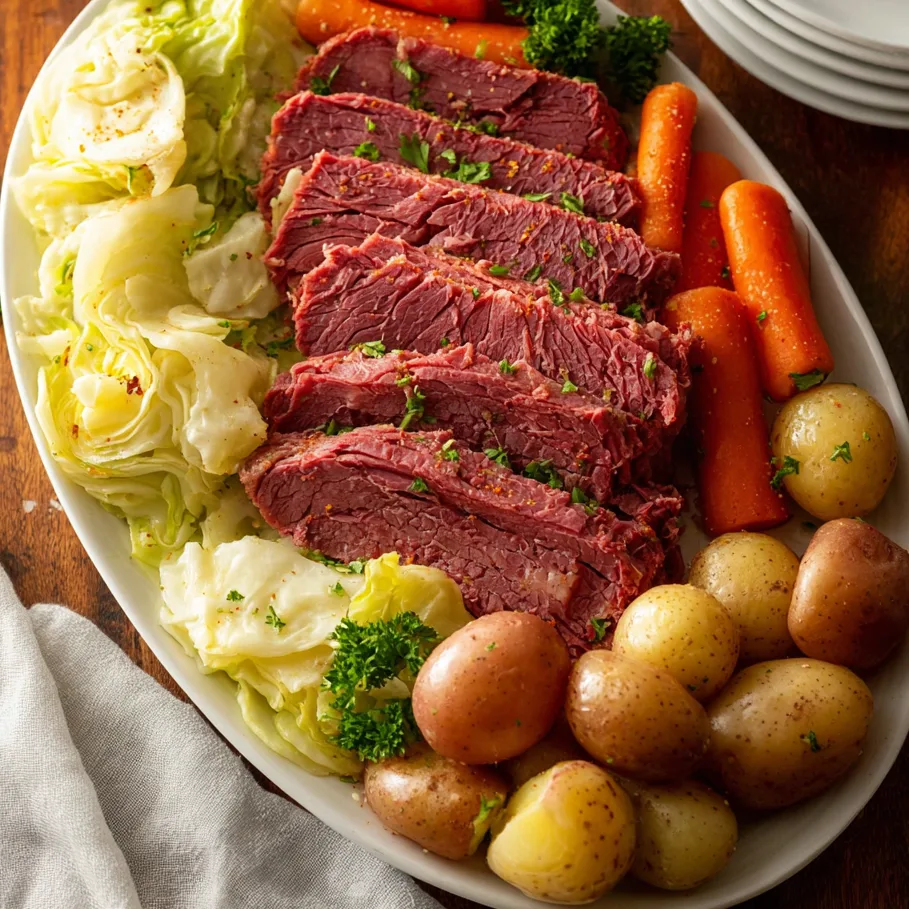
Why You’ll Love This Recipe
You will absolutely love this Slow Cooker Corned Beef and Cabbage because it eliminates the guesswork of traditional stovetop boiling. The slow cooker provides a gentle, consistent environment that ensures the beef never becomes rubbery or dry. Unlike other recipes that leave you with mushy vegetables, our staggered cooking method ensures the potatoes, carrots, and cabbage each maintain their perfect texture. It is a true “set-and-forget” meal, allowing you to go about your day while your kitchen fills with the mouthwatering aroma of spices and savory beef. Plus, cleanup is a breeze since everything happens in a single ceramic pot, making it the ultimate low-stress holiday dinner.
What Is Slow Cooker Corned Beef?
Corned beef is a salt-cured beef brisket, a culinary tradition that became a staple of Irish-American culture in the late 19th century. The “corn” in the name refers to the large “corns” or grains of salt used to preserve the meat. While traditionally boiled on the stovetop, the slow cooker version has become the modern gold standard. By cooking the beef at a low temperature over several hours, the salty brine mellows out, and the tough meat fibers transform into a succulent, tender protein. It is classically paired with root vegetables and cabbage, which were historically the most affordable and available ingredients to accompany the meat during the spring harvest.
Ingredients Overview
To achieve the best results, selecting high-quality ingredients is paramount. Here is what you will need for this recipe:
- Corned Beef Brisket (3-4 lbs): Look for a brisket that includes a seasoning packet. You can choose between a “flat cut” (leaner and easier to slice) or a “point cut” (fattier and more flavorful).
- Low-Sodium Beef Broth (4 cups): Using low-sodium broth is critical because the meat itself is already heavily salted from the curing process. This allows you to control the final seasoning.
- Bay Leaves: These add a subtle, herbal depth that cuts through the richness of the beef.
- Baby Potatoes (2 lbs): We recommend a mix of red and gold baby potatoes. Their waxy skins help them hold their shape during the long simmer.
- Baby Carrots (1 lb): These provide a natural sweetness and require zero peeling or chopping, saving you precious time.
- Green Cabbage (½ head): Roughly chopped into large chunks, the cabbage acts as a sponge for the delicious cooking liquid.
Ingredient Substitutions & Tips
If you want to put a personal twist on this classic, there are several easy substitutions. Instead of beef broth, many enthusiasts prefer using a bottle of dark Irish stout (like Guinness) mixed with water; this adds a complex, slightly bitter note that balances the salt. If you don’t have baby potatoes, you can use large Yukon Golds cut into two-inch chunks. For those who enjoy a bit of heat, try adding a tablespoon of spicy brown mustard or several cloves of smashed garlic directly into the broth. If you find the seasoning packet that comes with the meat too small, you can supplement it with extra black peppercorns, mustard seeds, and coriander.
Step-by-Step Instructions
- Prepare the Brisket: Begin by removing the corned beef from its packaging. Do not rinse the meat, as you want to keep some of that flavorful brine, but do discard the excess liquid in the bag. Place the brisket in the bottom of a 6-quart or larger slow cooker, fat-side up.
- Add Liquid and Aromatics: Pour the 4 cups of low-sodium beef broth over the meat. If the liquid doesn’t mostly cover the meat, add a splash of water. Sprinkle the contents of the spice packet and the two bay leaves on top.
- The First Simmer: Secure the lid and set the slow cooker to LOW. Cook for 5 hours. Avoid the temptation to open the lid, as this releases necessary heat.
- Incorporate Root Vegetables: After 5 hours, carefully arrange the baby potatoes and baby carrots around the sides of the brisket. Make sure they are partially submerged in the liquid. Cover and continue cooking on LOW for another 3 hours.
- The Cabbage Finale: Finally, place the chopped cabbage chunks on top of the meat and vegetables. They don’t need to be submerged; the steam will cook them perfectly. Cover and cook for the final 30 minutes.
- Rest and Serve: Use a slotted spoon to transfer the vegetables to a serving platter. Move the brisket to a cutting board and let it rest for 5-10 minutes. This is the secret to a juicy roast! Slice against the grain and serve immediately.
Expert Cooking Tips
The most important tip for success is the direction of your cut. Always look for the long lines of muscle fiber in the meat (the grain) and slice perpendicular to them. This ensures every bite is tender rather than chewy. Another professional tip is to cook “low and slow.” While many slow cookers have a “high” setting, corned beef is best when cooked on “low” to prevent the meat from seizing up and becoming tough. If you have the time, let the meat rest for a full 10 minutes before slicing; this allows the internal juices to redistribute, preventing the meat from drying out the moment it hits the plate.
Choosing the Right Cut: Flat vs. Point
When shopping for corned beef, you will likely see two different cuts: the flat cut and the point cut. The Flat Cut is the most common and is known for its uniform shape, making it very easy to slice into neat, beautiful pieces. It is leaner, which some prefer, though it can be slightly less juicy. The Point Cut is thicker and contains more intramuscular fat and marbling. This results in a much more flavorful and tender “shreddy” texture once cooked. For this slow cooker recipe, either works beautifully, but if you want those iconic, clean slices for a platter, the flat cut is your best bet.
Serving Suggestions
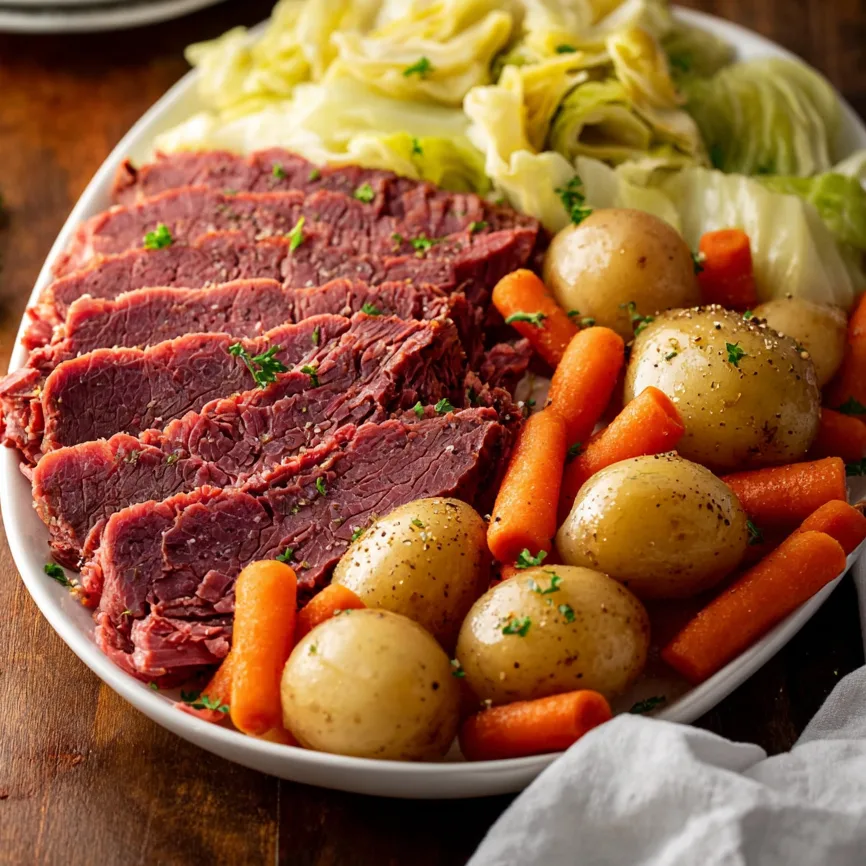
Serve your Slow Cooker Corned Beef and Cabbage on a large, rustic platter with the vegetables surrounding the meat. A side of creamy horseradish sauce or a variety of mustards (English, Dijon, or Grainy) is essential for dipping. To make it a truly traditional Irish meal, serve it alongside a warm loaf of Irish Soda Bread to soak up the leftover broth. A cold pint of stout or a crisp hard cider provides the perfect beverage pairing to balance the savory, salty flavors.
Storage & Make-Ahead Tips
Leftover corned beef is a treasure! Store it in an airtight container with a bit of the cooking liquid for up to 4 days in the refrigerator. To reheat, do so gently in the microwave or on the stovetop to keep the meat from drying out. These leftovers are perfect for making Corned Beef Hash the next morning or classic Reuben sandwiches with sauerkraut, Swiss cheese, and Russian dressing on rye bread.
FAQs
Q: Do I need to rinse the corned beef before cooking?
A: It is not strictly necessary, but if you are sensitive to salt, you can give it a quick rinse under cold water. However, using low-sodium broth usually balances the salt levels perfectly without rinsing.
Q: Can I cook this on the HIGH setting?
A: You can (usually for 4-5 hours), but we highly recommend the LOW setting for 8 hours. The slower process results in a much more tender texture for the brisket.
Q: Why is my corned beef tough?
A: Toughness usually means it hasn’t cooked long enough, or it was cooked at too high a temperature. If it’s still tough after 8 hours, give it another 30-60 minutes on low.
Q: Should I put the fat side up or down?
A: Always place the brisket fat-side up. As the fat renders, it will drip down and baste the meat, keeping it moist and adding flavor throughout the process.
Q: Can I use a larger brisket?
A: Yes, but ensure your slow cooker is large enough to allow for liquid to cover at least two-thirds of the meat, and you may need to increase the initial cook time by 1-2 hours.
This Slow Cooker Corned Beef and Cabbage is the ultimate comfort food that brings a touch of Irish tradition to your dinner table with minimal effort. By following our staggered timing for the vegetables and allowing the meat to rest, you’ll achieve a level of tenderness and flavor that far surpasses any stovetop version. It’s a reliable, delicious, and heartwarming recipe that you’ll find yourself returning to year after year!